The Difference between the Types of VA Businesses

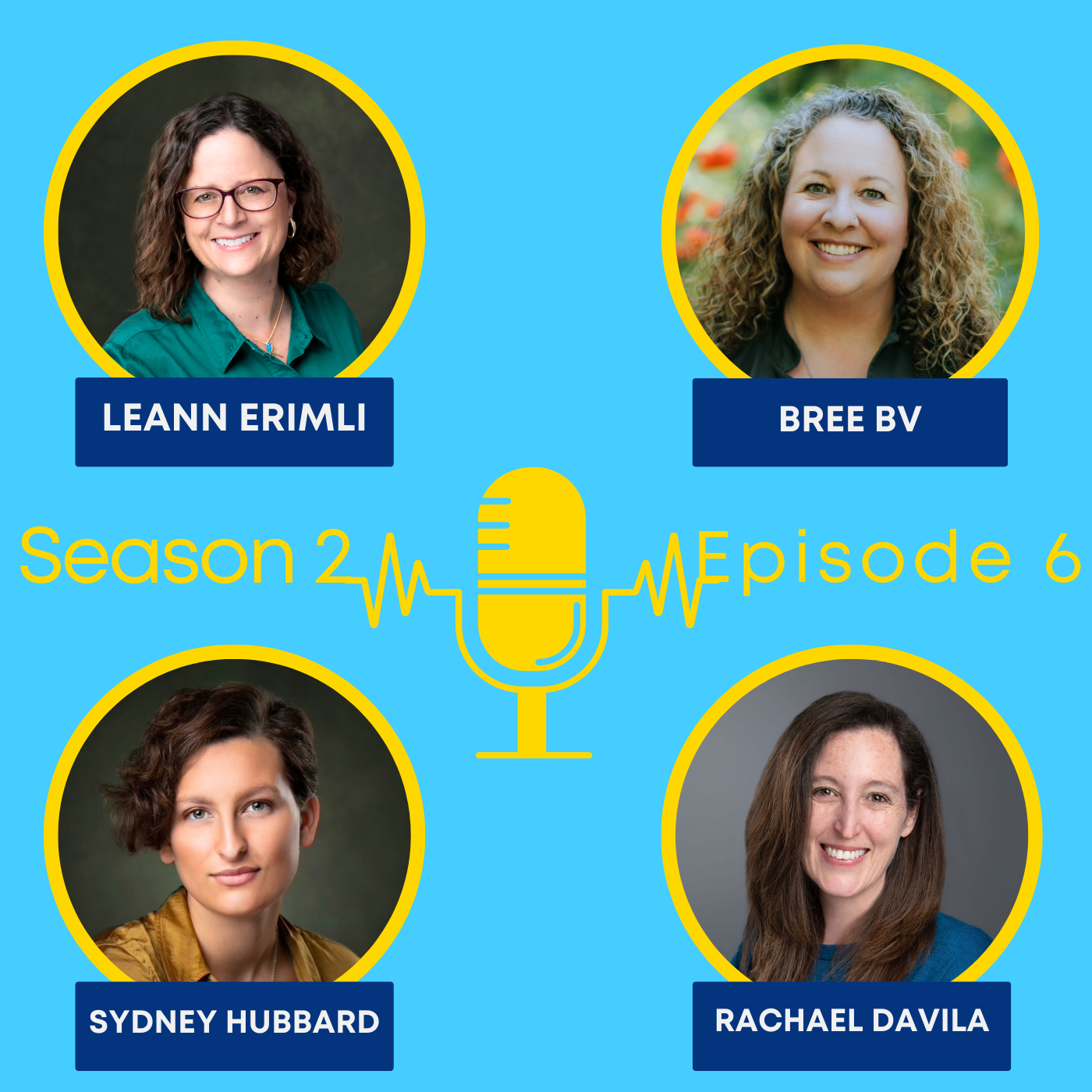


In past episodes, we’ve discussed the different kinds of support. In this episode, we’re focusing on the pros and cons of the different types of virtual assistant businesses: solopreneurs, teams, agencies, and online business managers (OBM).
A quick note…new episodes will resume on January 10. Happy Holidays and Happy New Year!
Have a question?
Email us at heyvapodcast@gmail.com, join our Facebook group Find, Hire and Work with a Virtual Assistant (VA): https://www.facebook.com/groups/findavirtualassistant
or find our contact details here: https://linktr.ee/heyvapodcast
Please leave a like, comment, or review, and share our podcast with someone you know who could benefit from our content.
0:00 Hi, welcome to the podcast that explores what virtual assistants want business owners to know when they start asking themselves the question, Hey, do I need a VA? I'm Rachel Davila. And after 18 years as a virtual assistant going it alone, I experienced a steep learning curve from the other side of the VA client relationship when I hired my own assistant. Joining me on this podcast is a group of friends and colleagues who all have their own take on what busy entrepreneurs need to know to find, hire, and work with a virtual assistant and mindfully answer the question, Hey, do I need a VA?
0:43 Let's get this episode started. Hello everyone. Welcome back to Hey, Do I Need a VA? The podcast. Season two, episode six, and today we're talking about the difference between the types of VA businesses. So in past episodes, we talked about the different kinds of virtual assistants, but there is a difference between a solopreneur, a team, an agency, and an online business manager. And we're going to get into those in this episode. With me always is Sydney Hubbard, Leanne Uremely, Embree Beebe, and each one has a different take on what the differences between the types of VA businesses.
1:31 So we're going to get started. I'm a solopreneur. That means I work by myself. I work independently with my clients. I am not answerable to really anyone else. If I need to bring on somebody to help my clients with something that I don't do, I don't act as the middleman. I let the client work directly with any other VA. I may coordinate some of the work that we're doing, but payments, contracts, working relationship is between the client and the VA. I am not the middle person. Bree, the way I understand it with teams is you are kind of the point of contact and then you work with somebody else with a client.
2:22 Will you explain how your team works? Absolutely. So the way that we work with clients, and I don't know if this is the way every team does, but the way that we do is when we team up with a client, I always have at least two team members working with that client. Either me and somebody else or two team members. The benefit of that is that you get collaboration in the background. There's multiple ideas and voices to help contribute to what the strategies are and how we want to implement things. Should life happen, somebody gets sick, somebody has a family emergency or somebody goes on holiday, there's somebody else in the realm of things that has their finger on the pulse, they know what's going on.
3:07 You have a connection with them. Sometimes there's more than two people, sometimes there's three or four, depending on what skill set and interests that are in the work that we're doing. I always try to team up my team members based on the things that they love doing and their interests. So if the client is into personal development or if they're more into healing or more into home improvement or things like that, making sure that the team member who's working with that client is as excited about those things as the client is. Very cool. Now, I don't believe any of us are part of an agency, but I've worked with one agency. It was not a great experience for me from a VA and a client side, but I know some people who really love them and they get a lot out of working with an agency.
3:58 What is the difference between a team and an agency? For my perspective, I also haven't really worked with an agency. This is just from what I've heard from other people. My understanding is that with an agency, it can look a couple different ways. You can have where you submit work to be completed and it goes into a queue or you have certain days of the week that they work on your stuff. And then whatever team member or virtual assistant in that agency is up for capacity, then when they have time, they go and they take the next thing off. If that's your stuff, they go work on it, they bring it back. The other version I've heard is that you get a team member assigned to you from the agency, but it could be for a shorter amount of time.
4:42 Maybe you have them for a week or a month and then it rotates out to somebody else depending on needs and what things look like in the background. That's my only hearsay experience. I think between working with a team and an agency, it's how much control and collaboration do you want to have with your VA who's doing the work? If you're okay with a doer, someone who's just task oriented and is going to do something that you have clear process and procedures and clarity on, then an agency might work well for you. I do know based on my research on agencies, they have high hourly minimums.
5:30 So you have to look and see if the amount of work that you need fits in with a doer task oriented scope of work and time. But if you need that collaboration and you need to talk through something, then you're probably better off going with a team, somebody who can help you, guide you into what you're looking for, how it will be best served across the board of the different people who can touch it. And then there is an online business manager. And an online business manager, as I know it, and I'm going to pass it off to Leanne in a second here, but an online business manager is a higher level team owner slash solopreneur who can either bring a team with them for a client or they can manage a team that a client already has in place.
6:36 Leanne, what's your take on an online business manager? You got the definition pretty much spot on. So an online business manager is not necessarily the doer. They manage the people that do the doing. So they usually end up somewhere in between the business owner and VA, VA bookkeepers, whatever you need. So I'm a trained OVM as well as I'm much more tech savvy. So I do both. So for me, what I do is I can manage the team, but I also take the piece that I like to do and I do both just because I like tech.
7:20 I'm geeky that way, it's fine. But I don't have a team. Like Bree has a team she brings with her. I work with the business owner to bring in the people they need. And then the contract is with for the ones I work with is between the business owner and the doer. So if they want to bring in a bookkeeper, I will manage the bookkeeper, but the contract is between the business owner and the bookkeeper. I don't pay out. That way it's their own business still. I'm not the middleman, but I'm managing OVMs generally end up being more collaborative. So they'll talk to the business owner, get the gist of what they want and how they want to do it.
8:05 Or they might say, hey, the business owner say, hey, I have a brilliant idea. And the OVM comes in and says, okay, this is how we're going to make that happen. And these are the people we need to bring in and manage and things like that. So it's kind of this middleman doer kind of person. The easiest way to think about it, OVMs do all sorts of different things. Some of them come right up and they are almost a business partner. Like they will literally run the business for the other person. Others will be a little more into that to your business. And I just make your dreams happen. That makes sense? Yeah. Now, Sydney, how would you classify your business?
8:50 I would say that I'm also a solopreneur. I think there was like a moment when I was first working for Rachel where it did feel like more of a team. I mean, I don't know how long that was, maybe a month, maybe two months. And then Rachel eventually handed off a client to me and I was like, okay, now I have my own clients. And that's when it was really like, okay, this is a solopreneur. I have my own business. But yeah, I think it's interesting to hear from the perspective of a team and the perspective of an OBM. I have a question for you, Rachel.
9:31 I know that you do work with another VA. Do you know, is that like, is that VA part of a team? Is that VA like a solopreneur? What's that experience like? So because Sydney has now switched over to being our podcast manager and does not have time for VA work for me, I've hired a VA team in the Philippines to do graphic work. And I guess in a way they are team members because I've handed off client work to them and I am acting as a midwife. So oh my God, I'm a team.
10:14 But for the most part, it's mostly like my graphics and stuff. It's really just one client because, you know, I think solopreneurs can get to a point where, especially if we've been in the business for a long time, I like doing graphic work, but it doesn't excite me anymore. And there are people who do it so much better. They love it. It's their zone of genius. And I would much rather be like, here you go. Here's what I need you to do for me, for this client. And I don't have to. I had to walk my talk, you guys. I mean, if I'm going to tell potential clients to hand over the things that don't jazz them, then I got to do the same thing.
11:02 And so actually, Rusty with Above Talent Creation, I met him through a client. He worked for an agency and the client worked with him. So I got to work with him through that and I got to see his skill set. So when he left the agency and went freelance and was starting his own team, I was like, yes, please. I love your stuff. I want you to do the stuff for me. And so I reached out to him to see if he was interested and he was. And so he's doing excellent work for the clients that I send him.
11:45 But for the most part, he works for me. Yeah. Oh my God, you guys, I'm a team. The reason I didn't want to be a team was I didn't want the responsibility of finding clients to hand off work to someone else. And I think what makes working with Rusty is he's not beholden to me to find clients to give him work. I am one client who happens to give him other client work, but he has other clients. So I'm just one client in his practice.
12:27 It's not my responsibility to be bringing in clients to give my team enough work. And that's my story. I'm sticking to it. At this point, my focus is to help potential clients find the right VA, know what they're looking for, help them create that kind of job description. And then if I'm the right fit, woohoo, let's work together. But if I'm not, pull from my referral network to help match clients and VAs because it's not a competition, folks.
13:09 We're all unique. We're all wonderful. And there's the right fit for everyone. And so that kind of brings me to a question that we do get asked often. And it is, should I build my own team or should I work with a team or agency? And I've often told potential clients who have asked that, I recommend building your own team. And there's pros and cons to both. And I'm curious what Bree thinks and what Leanne thinks about this. But if you build your own team, then if one person drops off, the fit's not right, you complete that task or life implodes or whatever, then you don't lose your whole team.
14:05 If you hire a team and you and your point of contact or you and someone on the team don't mesh anymore, then you've lost all of that support. That's kind of my take on it. And you can pick and choose who works best with you if you're working with everyone. However, I can see the value with having a really amazing relationship with your team lead who then can troubleshoot and redistribute projects within the team. Bree, what's your thoughts on building a team versus hiring a team?
14:48 It really depends on preference. There are pluses and minuses to everything. I've had clients who have come to me who had started with building their own team and they were like, I got a social media person, I got a website person, I got an email person and I can't get them all to talk together. So she felt like she was constantly hurting kittens. She was spending more time trying to get them all on the same page or if something shifted and they decided at last minute to do one thing, she had to remember who did she tell, did she make sure that she told everybody, did it get passed along the line? So she said that when she started to work with us, that it was really nice that she could just share it with one person and we would sprinkle it in the background.
15:30 Or if there was, you know, we were talking about one thing, we would think about all the different pieces that we're doing and make sure that they're all aligning with what it is versus having to make sure you're having those separate conversations and keeping everybody in the same page. The other way that we do things is if, and I'm not saying every team does this, if there is, like I'm not always the only point of contact. Sometimes my team members do meetings with clients and stuff as well. But if there is, it doesn't mesh anymore or there's a, it didn't work or they're just not getting what the vision or that kind of thing, then we don't take it personally. We're like, okay, that team member is not a fit. Okay, let's get you somebody else in.
16:10 But the benefit of having that through a team is that you've already onboarded us. We already know the information. I can share the information in the background or we can, they can see like we always capture like a client sheet where we have like the information about the client, what we do for them, what their mission is. We capture workflows and stuff like that in the background. So that part is still there for the new team member if it happens to have that process where it needs to switch out or we need a different vibe or something like that. Leigh Ann, from an online business manager, I know part of that role is to kind of be that wrangler for a client who might have already created a team.
16:50 What's your thoughts? As Free termed it, I'm the kitten wrangler. An online business manager does what a lot of people find out is a lot of work once they have their own team, which is, you know, you got two or three people that are not talking or you mentioned it to one person and someone else stops doing something else. Online business manager comes in and make sure it all happens and everybody knows what's going on and moves things along. The nice thing with using online business manager in your own team is if somebody drops off for whatever reason, you can bring somebody else on, the rest of the team continues. But like Bree said, there's pluses and minuses to both.
17:32 It just kind of depends which way a client wants to go. If they have like, hey, I already have this bookkeeper that I love and I already have this social media person that I love, well, I just need a VA. Well, okay, but the VA is in town. Okay, so bring in an online business manager and do the whole thing. It just kind of depends on where you are in your business. Yeah. Yeah. And depending on who you're working with, like us as a team, if somebody already has people that they're working with, like we have some clients who have VA's in the Philippines that they work with, or if they have a bookkeeper that they just need to give information to, we also collaborate with them and pull in whoever we need or if there's a gap that we don't fill or that kind of thing as well.
18:16 I find even as a solopreneur, I bring other VA's in all the time to support my clients and the real difference really is, I'm like, you can go talk to Leanne about your website. I don't need to be part of that conversation. Right? Like go talk to Bree about your social media content and then bring it back to me and I'll implement it. Right? So, I'm going to hand this off to Sydney because they're really good at this piece of it, but you talk to Sydney directly about your expectations. So I think, as a potential client, whether you work with a solopreneur who can fill in the gaps with colleagues or working with an OBM to manage people you're already working with or hiring a team to kind of fill in all the gaps.
19:14 I don't think you can go wrong. It's just knowing what you need and how it best supports your budget, your needs. I will say that online business managers do charge a higher rate than VA's do because they are overseeing it all and they are much, they're more of what, like an executive level. Right? If you as the business owner or the CEO, then they're more likely a COO, right? They're the operating officer keeping all the teams in motion. So you know, budget might be how you look at it, but it might be if your goals are vast and broad with lots of different specialties, it's not likely that a single VA can do all of those pieces.
20:08 So it's at what point in your journey are you doing those things? And if it's all at once, because you're like, I'm doing a rebrand and a website and a this and a that, and it's a whole slew of things, then you might want an OBM to kind of project manage that or a team owner who has the necessary skills within the team. Because like a solopreneur, like, yeah, I can take your rebranded look and put it into social media, but I don't do websites, but a solopreneur might be able to do some of the steps, but not all of them.
20:53 But it sounds like regardless, we all can get it done. Or know somebody who can help. Or know somebody who can help. Or I'll go to my VA referral directory and find someone for you, so just give me a call. Let me know what you need. Thank you so much for being here today with us on season two, episode six of Hey, Do I Need a VA? The podcast where we talked about the difference between the types of VA businesses. If you have any questions, please send us an email at heyvapodcast.gmail.com. Or if you have something specific to one of us, use the link tree to connect with us. Thanks so much for being here. We'll see you next time. Thank you for joining us on this episode of Hey, Do I Need a VA?
21:38 The podcast. If you found this episode helpful, please leave a like, comment, or review, and feel free to join our Facebook group, Find, Hire, and Work with a VA for more tips and tools. If you have any questions, please email them to heyvapodcast.gmail.com. We'll see you next time.