A VA can be more than an Admin
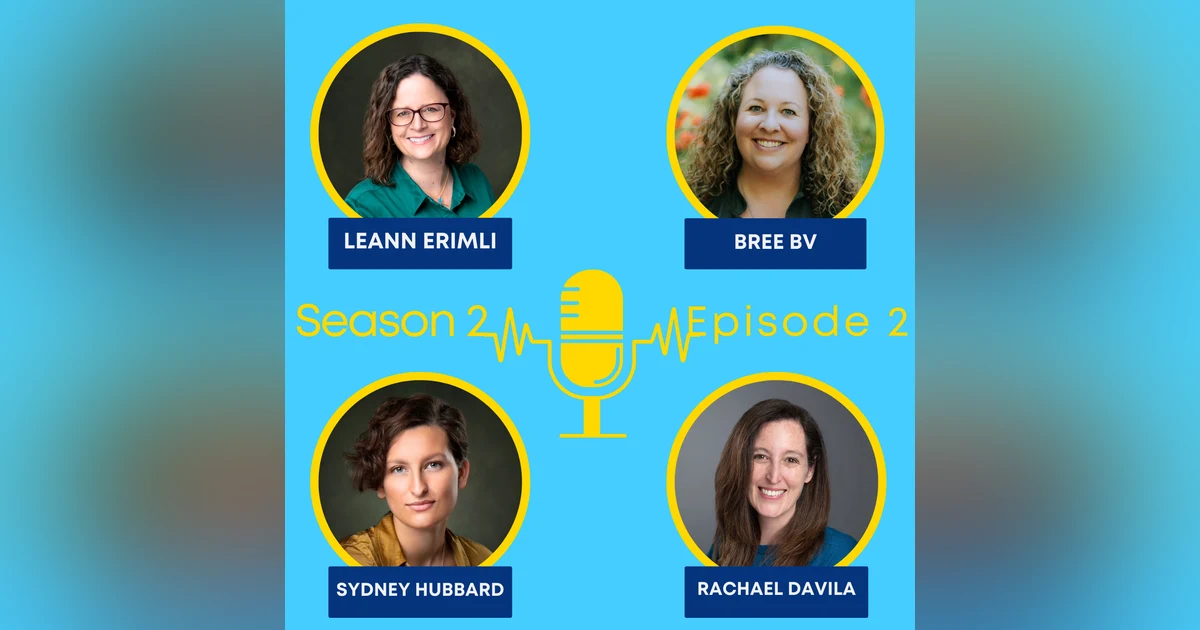
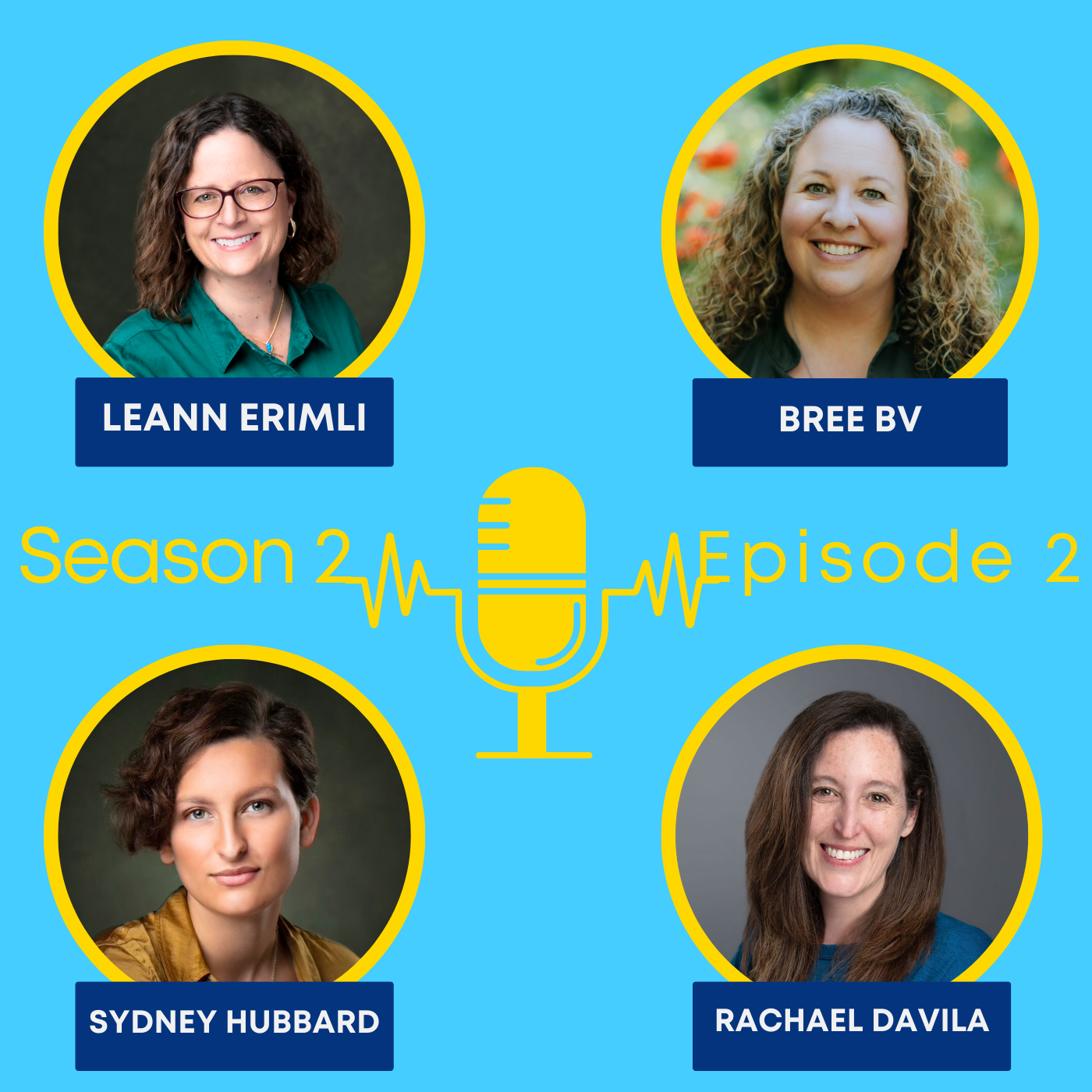


Virtual Assistants come with a whole range of skills, some are easy to share on their services page while others are not quantifiable as VA work. Some examples we share are brainstorming, coaching, reiki, or tarot reading.
This episode discusses the hidden skills a VA can bring to the VA/Client relationship beyond the traditional handoff tasks.
Have a question?
Email us at heyvapodcast@gmail.com, join our Facebook group Find, Hire and Work with a Virtual Assistant (VA): https://www.facebook.com/groups/findavirtualassistant
or find our contact details here: https://linktr.ee/heyvapodcast
Please leave a like, comment, or review, and share our podcast with someone you know who could benefit from our content.
0:00 Hi, welcome to the podcast that explores what virtual assistants want business owners to know when they start asking themselves the question, hey, do I need a VA? I'm Rachel Davila. And after 18 years as a virtual assistant going it alone, I experienced the steep learning curve from the other side of the VA client relationship when I hired my own assistant. Joining me on this podcast is a group of friends and colleagues who all have their own take on what busy entrepreneurs need to know to find, hire, and work with a virtual assistant and mindfully answer the question, hey, do I need a VA?
0:43 Let's get this episode started. Hey everyone, welcome back to episode two of season two of Hey, Do I Need a VA? The Podcast. I'm your host Rachel Davila and with me is Sydney Hubbard, Bri Bivi, and Leanne Oremli. And we're excited, second episode, season two. Woohoo! The episode today was spawned by a question that I came up with for last episode, but makes more sense for this one. It's a VA can be more than an admin. So basically, one of the questions I had was what services or tasks do you do or offer that may never be added to your services page that aren't quantifiable as VA work, but that we do and we bring within ourselves and our skill set to every client we work with.
1:44 For some of us, that could look like a marriage counselor, therapist, an accountability partner, a business coach, or just a business to business brainstorming mindset. So I'm going to open it up to everyone here. If VAs can do more than just admin work, what would you say you bring to the table that you can't necessarily quantify or explain in a regular discovery call? I'll start with Sydney. Yeah. So this is an interesting question.
2:26 I had to kind of think back for a second. But the beginning of my business and my initial name was Rose Design and Tarot. Like I did tarot readings for clients and that was a big part of what I wanted to do. Since then, I've kind of shifted away. But if a client asks me, I'm always down to give them a tarot reading. I think it is on my website if you dig a little bit, but it's not on my virtual assistant services, even though the clients who come to me for virtual assistant stuff are the same ones who would receive tarot readings.
3:09 And I love tarot. There are other professional tarot readers who do quantify and are like, well, this many minutes for this reading and I'll give you it. But I think for me in my business, it doesn't make sense to kind of market it like that. But yeah, I think that would be my service that I bring and provide to clients that isn't necessarily lumped in with my other skills. Cool. And sign me up. We'll schedule something. Free, how about you? Spark something for me that I'll add now. Thank you, Sydney.
3:50 For me, I think what I bring is a lot too of like that collaboration and that like getting the really deep knowledge and really wanting to connect deeply with you and your business and what you do and being able to emotionally invest in your business. So like I'm in it. I want to like be there with you through the ups, the downs and figure it all out together, figure out what we can change, what we can improve, how we can tweak things and bounce ideas off of each other. And quite often the feedback I get from a lot of my clients is that they just love having somebody who knows their business, who is passionate about what they do like they are and be able to bounce ideas and talk about it with somebody who's in it and not just nodding along or being there as a sounding board because they feel like they have to, but somebody who's like, oh, and this or bringing ideas that I tried with other clients and being like, hey, you know what, I have three other clients to do something similar.
4:48 We tried this for two of them and it went over really well. I think it would fit for your audience. How do you feel about trying that? Or we tried this platform or this. And I've also brought in, similar to Sydney, I'm also a Reiki master and I also have, I'm a cultivating safe space facilitator. So I bring in those things and those tools as well. I've gone to retreats and speaking things where my clients been the speaker and I'll go and they've asked me to Reiki the room or Reiki them or calm them down and things like that to keep the room grounded. I've also taught clients and stuff like things from the cultivating safe space framework so that they can use that in the work that they do as well and supporting them in other ways that may not seem obvious that they could go in and be applied there as well.
5:39 That's so cool. Leanne, how about you? I don't think I have as cool skills as Sydney and Brie. So a lot of my clients come back to me and say, yes, you're a tech savvy VA. You do a lot of tech stuff, but you put it in English. I can understand. So I think one of the things that I can't really figure out how to put it on a website is being able to explain the technical stuff so you can actually understand it and getting people to learn technology enough to at least have some clue what their business is doing in the technical side. The other thing that a lot of my clients have discovered is that I'm a good sounding board for them.
6:25 They'll say, what do you think about this? And I'll say, well, okay, for your clients, that's not quite right. Let's adjust this way. And I understand their demographics and their clients or their business. And I'm able to tweak things like I've had quite a few people who write articles and they want to come up with the right title. That'll actually get the clicks. So I wordsmith some of that stuff for them to sound board some of their ideas and go, let's change that. This is to this way. Let's move it. And some of those things, you just can't put on a website. It just doesn't, I mean, what do you call that as a service?
7:06 It's not quantitative, as you say. You can't just really come up with it. Yeah. So those little hidden things that it, and when we talk about fit, when we talk about looking for qualities beyond your handoff list, this is where those things kind of show up because if you're a potential client and you want to calm energy or you are into Harrow or Reiki or alternative kinds of mindset and modalities, then you may want somebody who at least has that open, that feeling.
7:53 Like I get called calm. I get, you know, people like how calm I am. I can't put that, I can't say I'm calm. That's why you should hire me. But when people want that feeling, they get that from me. I'm also a cheerleader, a nudger. They get accountability. You know, I hired Sydney because I needed the accountability and it wasn't something that I would expect Sydney to put on their website that they offer that. But even just having somebody who you're answerable to creates that accountability.
8:34 But like in the other side of my business, I offer accountability days and I give that to my clients because so many of them just need the time to do the work. And so after like body doubling, which is like, let's just work together because otherwise they won't put the time and effort into doing any of the tasks they need to do without having that piece. That's on my other business side, but maybe I should put it on my VA side because you don't know what you don't know until you like say, oh, I need that.
9:17 So how do you communicate these or do you just leave it as a general feeling and see how things go and you just bring it up in the moment? So in my case, I just bring it up. It just happens to say that I can explain technology in plain English sounds really odd. At least it does to me. So it just happens. Same thing with the sounding board kind of coming up with titles and stuff. I just kind of pointed out when I see it and go, hey, maybe we should work on this kind of stuff. Yeah, for the most part, it's always just in the moment for me. Do you mention it on my inquiry call and in my onboarding call that these are things that I do?
10:01 And I also give them permission that if it's not for them or that's not something that they're looking for to let me know, because I don't also want to assume that because I feel this way or I do this with other people, that it's something that everybody's looking for. So I kind of periodically put it out there and stuff to you. And I know that where Rachel is calm, I get very excited. And then like even right now, I'm like, don't talk really fast, Free, because when I get excited, I know that I can kind of title way people. So remembering to like slow down and like, we'll talk about these few things now. And if you want, I have ideas that we can share later. And I also do some of that, like, let's do some co-working stuff. I know that you're having some blocks. Where can we take out the blocks? There's some stuff that we just can't do.
10:42 Some of the stuff has to come from the client, right? So how can we get past those roadblocks? And sometimes it is like, let's do a co-working spot together where we can talk it through and do it that way, too. Those kinds of things come up as we run into those roadblocks. It can get as animated as you, Brie. I could talk. I could talk a lot. So but that that's usually like after the fact. Or if I'm very, very excited. So I don't think it's I don't think it's just a calm or energetic. I think we can be calm because you're calm too sometimes. But yes, I definitely think that I think as we VAs grow and get more comfortable in our business and what we do for clients and build those relationships with clients, I think the things that each unique client needs from us when the fit is right, we naturally kind of step into those roles that they need.
11:47 I can't speak for anyone else, but I feel like that I just am like, oh, you need this. Even if it's on like an intuition, like they're not asking. I'm not offering, but I just kind of go, hey, how about this? Or hey, what about we do this? Sometimes you have to baby step them and try something new or have a pitch an idea to try it before you find the thing. That's true. Yeah. For me, I think that when at the beginning of my business, I'm more clearly marketed what I do in terms of tarot. But as time went on, it just kind of fell to the wayside.
12:31 Even in like discovery calls with clients, it's not something that I think to talk about or mention. Although I like what Bri was saying that it's like, yeah, like in a discovery call, I might as well mention it and be like, if it's not for you, then it's not for you. And that's fine. I think my main, I guess, fear was that I would bring it up and that would make people be like, oh, no, no, no, thank you. But I like Bri's approach. And I think that that would be a good way if I wanted to kind of reintegrate it into what I do, would be a good way to do that. I think that brings up if a VA brings up something that doesn't feel right for a potential client.
13:19 Like if you brought up tarot and it wasn't right for the client and it turned them off, would you think we're not the right fit? You know what I mean? Like there's some things that we can offer and a client might just be like, yeah, I know that's okay. And like in my mind, okay, then how can I support you finding someone who feels better? It just becomes a quality that doesn't mesh. So I'm wondering if, does anyone hide anything or share something to kind of determine fit like in an interview?
14:00 Because when Bri said how energetic it got me thinking and I'm like, do I get excited? Do I share all the things that I share and do all the things that I do? Because it's like, here's who I am. Here's who I am. Like me or don't and we'll be, we'll either fit or we won't. And I kind of feel like if I show who I am all at once, then you won't be surprised down the road if I like start doing that. So I'm wondering, does anyone else feel that way? That's a good question. I think mostly for me, I have the instinct to kind of mesh into whatever the client wants and to fit with what the client needs.
14:47 I think that's part of being really new. I think what I really respect about all three of you is that you show up with a client and if the client isn't a fit, then it's not a fit. And none of you take it personally and you're like, okay, moving on. I think for me, I have the drive to just to kind of like people fleas, but to like, to like do the best to be able to do the work that a client wants. But I think that that's something I would want to integrate is like, is something that would fully show up as myself in my business to be able to determine fit.
15:31 And if the client sees everything and is like, no, thanks, then that's okay. I think I'm like flexible to the point of not necessarily having something that determines fit. But I think that that would be something for me to think about. Yeah, because it goes both ways, right? We're interviewing clients as much as clients are interviewing us. So if we show up as our authentic self and the client's like, no, then in turn, that means, okay, we're also standing for ourselves because we want clients who get us who look at our business as something that they support and encourage.
16:17 You know, it goes both ways. Business to business, it's not employee to employer. It's we're both coming with equal footing. So finding finding that fit, I feel is like super. Yeah, I was just gonna say, I don't necessarily like jump into an inquiry call and be like, and I'm a Reiki master and I do Cultivating Safe Spaces. The Cultivating Safe Space stuff is on my website. So like, if they were to go there, they would see it. But if it happens to fit the conversation or it's similar to work that they're doing that would show that I have knowledge and it's relatable, then it would come up.
16:59 Sometimes it comes up throughout the working relationship. And if it applies, it applies. But I feel like because especially we offer so many different services that I try to keep it more focused on the virtual assistant services that we can provide. And if it comes up in the rest of the ways, then I share it. But the other thing too, is that sometimes you don't get the hit right away off of just the inquiry call, whether or not it's a fit. So sometimes it's just like also putting in, let's try on a trial period for a couple months and have that as the feeling out period as well that I've had clients where it's like by the third month, I'm like, we don't work in the same way. And I don't feel like I can support you the best way that could.
17:40 Let me put you to Rachel or somebody else who might be able to help find somebody else that can help support you better for various reasons. Yeah, just like Bri, sometimes you just don't know right away if you're a good fit. I've had clients where I've been like, I really got to get rid of this client. But just because we work differently, they're night owls, I'm not. They didn't, you know, we have boundary issues, whatever it is. But one of the things I've learned over time is if I don't show up as me, I'm miserable later. So, you know, yeah, sometimes clients walk away. It's like, okay, yeah, that's we weren't a good fit.
18:21 That's fine. So don't panic, Sydney, you'll get there. I remember the first time I fired a client because when the fit's not right, I overthought the whole thing in my head for weeks before I was like, no, this really just is not like the person the client was wonderful, amazing. We could talk one on one, but in the working relationship, it wasn't right. And Sydney, it took years to get to the comfort level to be like, okay, I can trust my instincts about how it's going.
19:01 And clients don't always know or they may know that we're that we're not the right fit. And so it's okay to say we're not the right fit and either side can end the relationship. My dad told me he's like, you can fire clients. I'm like, you can? Who would do that? But you guys, she capitalized everything and put the entire request in the subject line. I thought she was yelling at me every time I got an email and it my stomach hurt. And I was like, you don't really know what you don't know until you're faced with it.
19:42 And then it starts to become a boundary or a hard no. So I'll bring that question up. How has an experience with any of this helped you to create a boundary or a hard no when it comes to a task or a client or mine? My hard no cold calls and wiping people's butts. I don't do those because now I got people to do all the other things I don't do like data entry and research. Yeah. My hard no has been for a very long time. I don't do bookkeeping. I did at the beginning because I can do it.
20:23 I'm capable, but I really hate it. So yeah, no, that one's a hard no for me that and like you said, Rachel, cold calls. Not doing cold calls. Cold emails, not so bad. Cold calls. Yeah. How about you, Bri? Yeah, for me, one of my boundaries is working. I don't want to work in urgency on tasks that we don't need to like newsletters or social media posts. Like if it's something continuously where it's like we've known about it, we've set the ideas for a couple of weeks, but every time we go to do one, it's like I'm not getting stuff till the night before and then it's like, why isn't it ready? That doesn't work for me.
21:03 That's that ball in my stomach that I just can't do. And don't get me wrong, urgency things come up and they need to be dealt with. But if it's like day to day tasks that we can avoid, then that's one of the ones for me. And also like one of the ones for me is like the bookkeeping and ads. I don't want to do Facebook ads or Google ads or anything like that. I'm like, let me hook you up with somebody in my network that can do ads because they will do them so much better than I will. I can help with the graphics or the planning of what the flow is and stuff like that, but actually doing the ad stuff. We've learned a lot of things. There's some things that I'm like, I'm capped out. I would like to keep in these zones now. Sydney, you got a hard no. I think similar to Bri, I don't like to work in urgency.
21:49 I don't like having do a ton of stuff the night before a client needs it because I wasn't getting the stuff that I needed to do it, especially because my schedule is already so packed that with the work that I'm doing, I don't really want it to be piled on like that. Because I think I expressed this in my business contract, but a hard no of not being paid. That's pretty low standard, but I think there's got to be a boundary somewhere. I think at first when I was working and there wasn't that boundary, I was like, oh wait, there does need to be something hard there that's like, okay, this is how I invoice and this is when I need to be paid or else if I'm not being paid, I can't work.
22:47 I'm sure more boundaries will come up as I continue to work, but in terms of the services I offer, I'm pretty flexible. I would prefer to not cold call. That's just really not like within my skill set. I'd prefer to like work within my skill set, but I've never had someone ask me to cold call, so it hasn't really come up. I think that's a generational thing. When we all started, we didn't have as much internet. I was already in business when Facebook came online, so it wasn't really like we had other alternatives.
23:28 Leanne mentioned in another episode about how people would send her the stuff on a disc or fax it to her and she would send it with a disc. Cold calling was the way to do it when you could send an email and stuff. I guess maybe that's where it's come up. Having gone through clients, learning what skills you bring to the table that aren't necessarily quantitative, how has this improved your business or working relationship with a client or how has it derailed you? We'll start with Leanne.
24:11 Yeah, make me think on the spot. You're welcome. I don't know that it's derailed me as much. I think it's actually helped build my business in a direction I wanted it to go. Some of the stuff that I do, it works with the clients I work with. If it isn't their cup of tea, then they weren't really my client anyway. I feel like looking back, it's built the business I want. At the time, it may not have felt that way. I think we create our boundaries and our no's based on experience, based on what we learn as we go.
24:52 I think it does naturally go and pivot and shift. They say the path to success is never a straight line. It's full of ups and downs and squigglies and all of that. I think we can look backwards and be like, that's why I put the things in place that I did, but you don't see that going forward. I think for clients too, the road to working with a VA may not be smooth sailing. It may have those pivots and squiggly U-turns, but each person you work with, each thing that works or doesn't work gives you that block in your foundation.
25:43 I hear from a lot of people, they're like, it didn't work. That's it. I'm not working with a VA. It's like, no, give us another shot. Maybe the fit wasn't right. Maybe you had the wrong kind of VA. Maybe you didn't know what you didn't know, but now that you know better, you can ask for more things. You can guide the relationship a little bit better. But I think the road is never straight. It's always that way. Bri, how about you? Like Leanne said, I don't know that I've had it derail my business.
26:24 I think it's been more of an asset and that it's become something more that I've gotten more referrals and stuff because of it, because people are like, no, she takes the time to get to know you and having somebody who gets to know you and your business and then hear what your goals are and asking questions to try and are we still, is this still the goal or what's the next goal? We're kind of getting at the three month mark and we haven't really checked in. What do we want to keep working towards? Having that somebody who can kind of step out and ask you those questions has become a really big asset for me and keeping us on track and that people find value and you get, I find I have deeper relationships with my clients because we have those deeper conversations and things on a more regular basis so that a lot of them become my friends.
27:11 I'm not really good at not having dual relationships with most of my clients. In fact, I'm visiting in Victoria and I have clients in Victoria and on the island and so I go hang out with them and we go have lunches or we go to the beach or we have weekly calls just to check in on each other and chat. And so I feel like it's developed into something different and that it's become more of an asset and thing to be known for. Nice. Yeah. I like the friendship too. The long relationship, not the project. I want to know my clients business. I want to get in there and be like, okay, how are we going to make this grow? Because if you grow, I grow. Let's do this.
27:51 It's funny. Actually, some of my clients, now their kids are friends with my kids and they like connect and chat and it flows down. Well, that's how I got Sydney was from a client. Sydney, how does it show up for you? Yeah, I think me being flexible and having a lot of stuff that I don't necessarily put on my service page, I think that it's more, I mean, there's a derailing aspect in that I haven't really focused in on one thing and I haven't really decided like, okay, going forward in my business, what are the main services that I want to market?
28:38 I haven't really decided that, but I also think that at this point in my business, I don't need to have made a decision about that. So I think that it's been more of a growth factor in terms of me learning different skills and learning more of what I like to do. Yeah, I definitely feel that's right, especially for you. There is this growth, let me learn everything. Let me take on every client because there's not that experience threshold and the only way to have that experience threshold is to live it.
29:22 I mean, I can't speak for anyone else, but I've had clients where I was like, why did I take you? Why? Because it could have been a moment of a thought pattern of scarcity. I needed to fill my business. I did do that once. I was like, my husband lost his job. I was building my business and I was like, we need money, we need it now. I need to fill this business and I took on every client and did all the work. I was like, that wasn't right. But then I eased out and eased into what was right, but it took time to learn and everything.
30:06 I think in one of the previous episodes, we talked about the different kinds of VA's and I'm starting to see that there is a third option because we've talked about doers and we've talked about collaborators. I'm seeing in some VA's that I'm meeting that there are doers who are building the experience to become collaborators. They're in that transition period to where they have enough experience to know what's not working and learning the experience to what is.
30:50 I think have that transition period and I think it does come from experience and doing the work and learning what works and what doesn't work and having all of that. Does anyone else have any stories, thoughts to share about how a VA can be more than an admin? I don't know if it's necessarily towards that, but I just wanted to also highlight that similar to Sydney is also where a lot of our clients are and knowing that that's kind of part of how we all do our business journey and that that's okay. Whoever you are, whatever point you're at, that that's part of the process is trying things on until you figure out what you like.
31:35 How does a VA help a client through that journey? I know how it shows up for us in learning what we like and don't like to do for clients, but from a client perspective, how do you think it shows up? I know for me it's part of those conversations when I hear a client saying repetitively, I really have to do this again or I'm creating this thing and I'm like, you don't seem very excited about it. Are we sure that like what's the purpose? What's the motivation behind doing it? Is it because something that we're shitting on ourselves or is it something if somebody told us we should be doing or is it something like in my experience, if you're not excited about it, when you talk about it, people feel that right?
32:17 So kind of being that check in point, like why are we doing this? Is this actually an alignment? Is this what you're wanting to go? Is this going towards those goals? And if not, maybe we check in on it. Maybe it's something we repurpose in a different way or maybe it's something we delete because we tried it and it wasn't the thing. And that's how a VA is more than an admin because an admin wouldn't bring up any of those points or questions. Adding to what Brie said, the other pieces, even if they find out they need to or should be doing something, they may not have to be doing it, which is that last little piece of okay, client, I have clients who are like, I've got to do this.
33:03 I'm like, but do you? Do you have to do that? Can we make somebody else do that? Is that the best use of your brain? So asking that piece too, and I've had clients go, thank God, you mean I don't have to? I'm like, no, there's people that we can bring in or I can do it. You don't have to do all this. Some of the things just, I had a client who could not write their website content. I'm like, you know we can get a ghostwriter, right? They're like, we could? And just the whole conversation changed and getting people to understand that even if it's their business, they don't have to do all of it.
33:44 And it doesn't have to all be on their shoulders. Hey, admin, do all this for you. And they're like, no, no, no. Let's have a discussion and figure out the pieces that you want to do because you want to do them, the reason you got into business, and let's fix all the rest. Either I do it, we bring in somebody else, sometimes hire, you know, if you have a kid that wants to make a little bit of money and it's easy data entry, okay, fine, here you go, kid, go do that. Those kinds of things help the clients, especially when they don't know. They don't realize I don't have to do this. The fact that even having to mention a ghostwriter, someone did write your copy for you, I thought that was like a common knowledge, but I've had clients go, that's an awesome idea.
34:31 Like, yeah, there are a few of them out there. That whole you don't know what you don't know, right? Yeah, yeah. Thank you so much for being here today for episode two of Hey, Do I Need a Ghostwriter? Do I Need a VA the Podcast, where we talked about how a VA can be more than an admin. If you have any questions about today's topic or anything else, reach out to us at heyvapodcast.gmail.com or use our Linktree link to contact any one of us with a specific question or comment. And we will see you next time. Thanks for joining us. Thank you for joining us on this episode of Hey, Do I Need a VA the Podcast?
35:15 If you found this episode helpful, please leave a like, comment, or review. And feel free to join our Facebook group, Find, Hire, and Work with a VA for more tips and tools. If you have any questions, please email them to heyvapodcast.gmail.com. We'll see you next time.